Markets for meat, vegetables, sweets, beshts (cloaks), weapons, dried goods and more formed in the area, a daily exchange point between townspeople and traders.
Kuwait City · Al-Qibla · Heart of the historic souks
Souk Al-Mubarakiya (Kuwait City)
Shaded lanes, the scent of spices and coffee, wooden shopfronts, and specialist souks that preserve a picture of Kuwait’s old commercial life.
08:00–22:00Hours as provided in the site data4.4 / 5Maps rating, changes over time9XFF+G5Plus Code in Kuwait City
NameSouk Al-Mubarakiya
LocationAl-Mubarakiya, Gharabally Souq St, Kuwait City
Coordinates29.374588, 47.973118
NatureHeritage souk and visitor destination
About the destination
About Souk Al-Mubarakiya
Welcome to Souk Al-Mubarakiya, widely known as the heart of Kuwait City’s historic souks. It lies in the heart of the capital, in the Al-Asimah Governorate, State of Kuwait, and is a major hub for visitors to the area.
Souk Al-Mubarakiya→Kuwait City→Al-Asimah Governorate→State of Kuwait
When visiting Souk Al-Mubarakiya, visitors can explore nearby historic landmarks and attractions, including Sheikh Mubarak Kiosk and the Grand Mosque, as well as Seif Palace, the Kuwait National Museum and the Sadu House.
Identity of the place
History and significance of Souk Al-Mubarakiya
The souk is not a single building but an interwoven commercial memory — academic and official sources describe Al-Mubarakiya as part of the old heart of Kuwait and a network of specialist souks. Kuwait University states that the area’s souks have roots stretching back more than 180 years, with more than twenty specialist markets known for different trades and goods.
This year is linked to the kiosk of Sheikh Mubarak Al-Sabah, a historic landmark within Al-Mubarakiya. It should therefore not be used as a simplified founding date for the whole souk.
Al-Mubarakiya School opened in the area, a sign of the city center’s shift from trade alone toward education and organized public life.
The area underwent reorganization and development that preserved the character of the souks and their heritage lanes rather than converting them into a modern enclosed shopping center.
A fire damaged part of the oldest historic zone, then the debate about protection and restoration renewed the importance of documenting buildings and urban identity.
Reading the souk
What will you see in the lanes?
Specialist souks
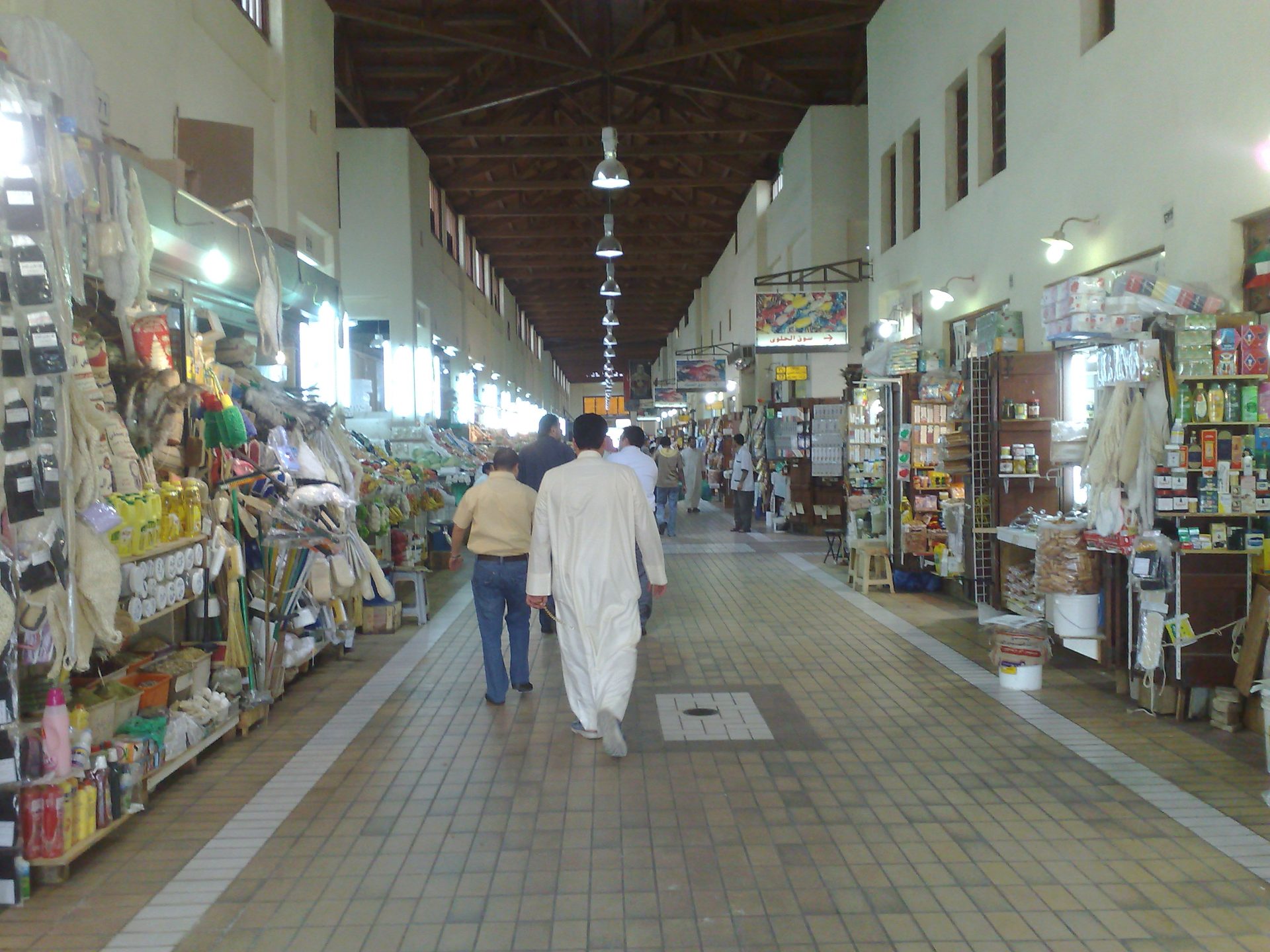
Historically, parts of Al-Mubarakiya were known by names linked to goods and crafts, such as the besht, sweets, meat, vegetables, weapons and dried-goods markets.
Shade and wood
The covered lanes and wooden elements are not mere decoration; they are a local response to sun and heat and give the souk its architectural identity.
Food and fragrance
Spices, dates, coffee, perfumes and local foods are an essential part of the sensory experience of the place, without limiting the visit to any particular shop.
Civic landmarks
Near the souks stand traces of the history of administration, education and public life, above all Sheikh Mubarak Kiosk and what remains of the old city’s memory.
A practical plan
Before you go
Entry and costs
Entry to the general souk area is free and needs no ticket. Pay only for the purchases, food or services you choose. Some landmarks or events may have separate rules.
Best time
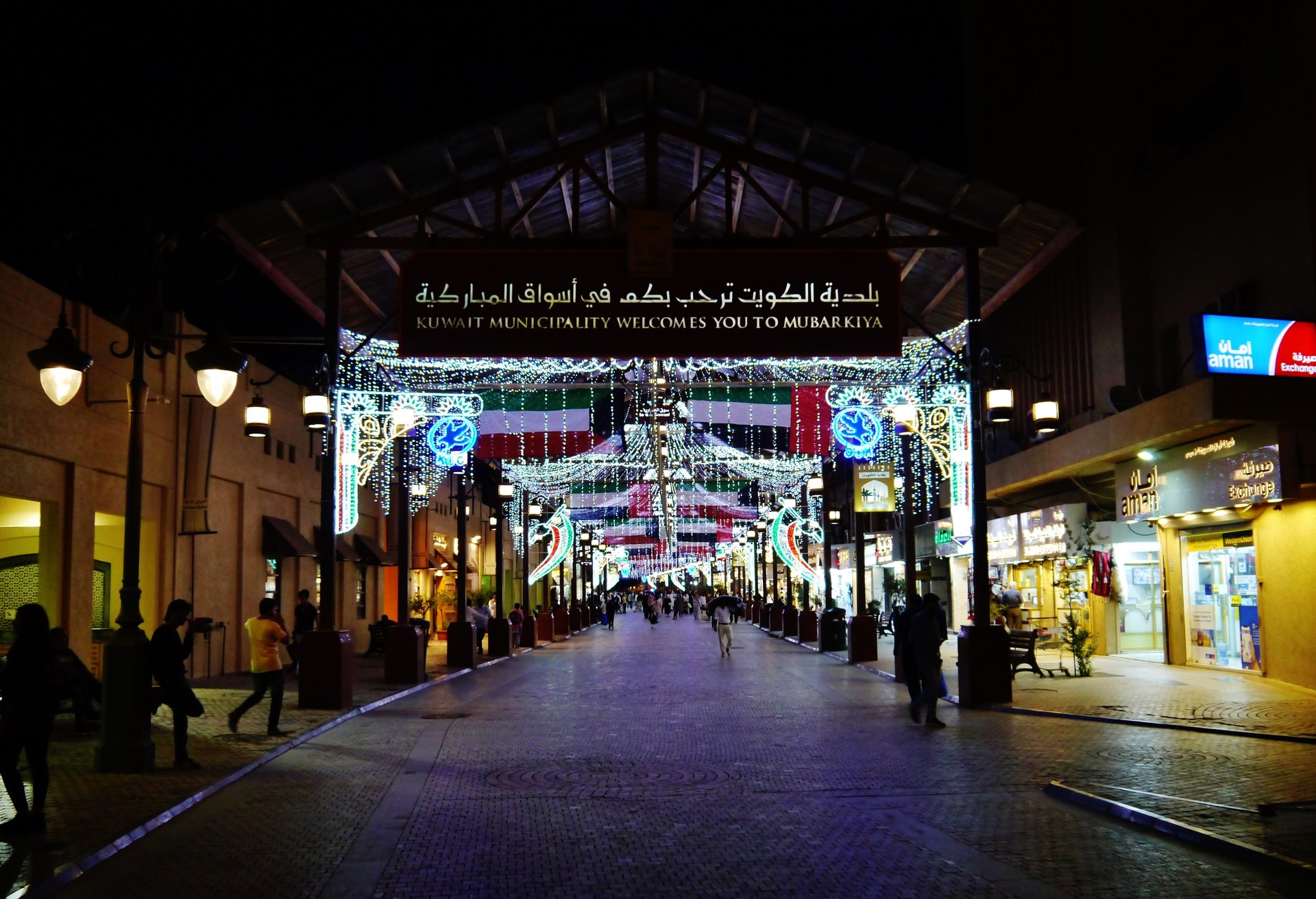
The milder months are more comfortable for walking. Evenings offer a livelier, lit atmosphere, while a morning visit usually allows a relatively quieter exploration.
Suggested duration
Plan for about an hour and a half to three hours. Add time if you are interested in history, food, or walking to nearby public landmarks.
Clothing and conduct
Choose comfortable, modest clothing and suitable walking shoes. Respect the privacy of vendors and visitors when taking photos, and ask permission when photographing people up close.
Getting there
Location and how to reach Souk Al-Mubarakiya in Kuwait City
By plane, bus, taxi or car — the souk lies in the Al-Mubarakiya district of central Kuwait City on Gharabally Souq Street, Plus Code 9XFF+G5.
From Kuwait International Airport
The direct option is a licensed taxi from arrivals to central Kuwait City. The airport authority publishes an indicative fare for the journey to Kuwait City; check the posted price at the airport before boarding, as fares may change.
Public buses
The airport’s official transport page lists public routes including 13, 99 and 501. Route 13 passes toward intermediate areas including Mirqab, from where you can continue on foot or by a short taxi ride. Check the schedule and route on the day of your visit.
Taxis
Use licensed taxis or well-known pick-up points, and ask for the meter or the prevailing regulated fare. Reaching the edge of the souk area is often easier than trying to enter the inner lanes.
By private car
Aim for the public parking facilities in the central city area, then continue the short distance on foot. In the evening and on holidays, leave a time margin for finding a space and leaving the area.
Practical arrival notes
- Set your map destination to “Souk Al-Mubarakiya, Gharabally Souq St” to avoid confusion with other souks.
- From the airport: head first to central Kuwait City, then finish on foot or by a short taxi to the edge of the souk.
- By bus: alight at the nearest central stop (such as Mirqab), then walk toward the souk.
- By taxi: ask to be dropped at the souk entrance, not inside the narrow lanes.
- Check official schedules and fares on the day of your visit; they can change.
Visitor needs
Services and facilities around the souk
We list only the types of services to keep the guide neutral and avoid turning it into an advertising page. Availability and hours may change, so check local signs on arrival.
Restrooms
Public services exist within the souk area and surrounding facilities; opening hours and accessibility may vary.
Parking
Public and multi-storey parking around the central city area. Pressure is higher in the evening and on holidays.
Food
Popular restaurants, grills, rice dishes, seafood, bread, sweets and dates, plus coffee and tea shops.
Accommodation
Hotels and serviced apartments of various grades in central Kuwait City; choose according to budget and proximity to transport routes.
Daily goods
Grocery stores, food markets, pharmacies and everyday services in the nearby urban area.
Fuel and charging
Fuel stations and electric charging points are distributed around the city; check the live map and compatibility before relying on a specific point.
Payment & ATMs
ATMs and card payments are widespread around central Kuwait City; keep some cash for smaller vendors.
Prayer spaces
Public prayer rooms and mosques are found around central Kuwait City; respect prayer times when planning your walk.
Pharmacy & first aid
Pharmacies and first-aid points sit close to the urban core; for emergencies, call the local unified number.
Accessibility
Some lanes are paved and wide, while heritage parts get crowded; use the wider entrances and avoid peak hours.
Around the table
What to eat without commercial lists?
Treat Al-Mubarakiya as a district of flavours, not a restaurant list. Look for the types that express local cuisine and suit your budget and dietary needs.
Kuwaiti-style rice and meatsGrillsSeafoodLocal breadSweets and datesCoffee and teaSpices and herbs
Seasonal strategy
When to visit by season
A general read from Kuwait’s usual climate over the years, not from any single snapshot.
SeasonClimateCrowdsBest timeTip
Dec – FebMild and pleasant, mostly clear daysModerate, higher on holidaysThroughout the day, mornings bestThe most comfortable season for long walks through the lanes.
Mar – AprWarm and gentle, heat builds graduallyModerateMornings and late afternoonsA balanced window before summer heat; good for daytime photography.
May – SepVery high heat and midday humidityQuieter by day, livelier at nightAfter sunset into the late eveningAvoid the midday peak; start once the heat eases in the evening.
Oct – NovReturns to mild, fresh airGradually increasingDay and eveningA comfortable transition blending calm crowds with gentle weather.
By type of visitor
Routes tailored to you
Three common approaches — pick the one that fits your group and pace.
Families with children
Short, close-by routes with breaks for rest and food.
- Start at the wider entrance to avoid crowds
- Plan a seating break for a meal
- Skip the midday peak
- Carry enough water for all ages
Photographers & details
Soft light, woodwork and shifting shade through the hours.
- Golden hour after afternoon gives warm tones
- Capture wooden facades and arched lanes
- Respect vendors’ privacy when photographing people
- Try the souk at night for the lit atmosphere
Low-effort / accessible
Flat, short routes with frequent rest points.
- Use wide entrances and paved lanes
- Split the walk into short stretches
- Rest in shaded spots
- Check public facilities on arrival
Time plans
Suggested general routes
Half-dayabout 3 hours
A quick feel of the souk’s spirit without rushing.
- Main entrance and first lanes
- Spice and coffee market
- Sheikh Mubarak Kiosk
- A light food break
- Back through the central lane
Full-dayabout 6 hours
A deeper experience with the souk and nearby landmarks.
- Morning walk through specialist lanes
- Kuwait National Museum and Sadu House
- Lunch around central Kuwait City
- Evening stroll in the souk
- Close near the Grand Mosque or Seif Palace from public areas
Knowledge & responsibility
Science awareness & visitor responsibility
As a non-profit project, the guide offers context that helps you understand and respect the place.
Preserving urban memory
The souk is a living network of specialist markets with roots beyond 180 years. Understanding it starts by separating the history of individual landmarks from that of the whole network.
Photography that respects privacy
Photos capture beauty, but ask before close-up shots of vendors or visitors, and respect spaces that call for privacy.
Heat & health awareness
In the hot months, start when it cools, drink water often, and use the shade. Local norms respect prayer times and calm.
Local support, no commercial bias
The guide supports knowledge by types of service, not by naming specific shops, keeping it neutral as a non-profit project.
Zero waste & respect
Take your litter with you and do not handle heritage displays or goods without permission. Responsible visits protect the place for the next generations.
In the near surroundings
Landmarks and attractions around Souk Al-Mubarakiya
Public landmarks that complete the reading of central Kuwait City and can be reached on foot from the souk area.
Sheikh Mubarak Kiosk
A historic landmark within Al-Mubarakiya linked to administration and public life in the era of Sheikh Mubarak Al-Sabah, and the best point for understanding why the souk carries his name.
The Grand Mosque
A prominent religious and architectural landmark in central Kuwait City. Respect prayer times and entry and dress requirements when visiting.
Seif Palace and its surroundings
An area of political and architectural importance on the old urban waterfront. Some parts are not an open tourist facility, so view it from permitted public places.
Kuwait National Museum and Sadu House
Cultural institutions that help place the souk in the wider context of Kuwait’s maritime, Bedouin and craft life. Check official opening hours in advance.
Quick answers
Frequently asked questions about Souk Al-Mubarakiya
Operational information changes. Where this page conflicts with a recent official announcement, follow the official announcement.
Where is Souk Al-Mubarakiya located?
Souk Al-Mubarakiya is in the Al-Mubarakiya district of Kuwait City, on Gharabally Souq Street, in Al-Asimah Governorate, State of Kuwait. Nearest reference point: Plus Code 9XFF+G5.
Is there a map of Souk Al-Mubarakiya and what is the Plus Code?
Yes, the souk appears on Google Maps when you search “Souk Al-Mubarakiya, Gharabally Souq St” in Kuwait City. The Plus Code is 9XFF+G5, and you can open the direct map link from the “Directions on the map” button above to walk or take a short taxi to the edge of the souk.
Does Souk Al-Mubarakiya require an entrance ticket?
Entry to the general souk area is free and does not require a ticket. Purchases and some separate activities or services have their own costs.
What is the best time to visit Souk Al-Mubarakiya?
The atmosphere is usually pleasant in the milder months, and the late-afternoon and evening period suits those who enjoy the lively souk buzz. A morning visit is often best if you prefer relative calm.
How long does a visit take?
Allow about an hour and a half to three hours to explore the lanes and specialist souks and enjoy a meal or drink. The duration is an estimate and varies with your interests.
How do I get there from Kuwait International Airport?
Take a licensed taxi from the airport, or public transport lines heading toward the city center, then continue on foot or by a short taxi ride. Check official schedules before you leave, as they can change.
Are there parking facilities?
There are public and multi-storey parking facilities in central Kuwait City around the souk area. Pressure increases in the evenings and on holidays, so allow extra time to find a space.
What are the opening hours of Souk Al-Mubarakiya and when does it open?
Location data lists approximate daily hours of 08:00–22:00 (Monday to Sunday) for the general souk area. These are indicative and may vary by shop, season or event, so it is best to check local signage or official channels on arrival, especially during holidays and special occasions.
Are there famous restaurants and foods at Souk Al-Mubarakiya?
The souk is known for popular eateries, grills, rice dishes, seafood, sweets, dates and coffee. One historically well-known food spot in the area is Mubarakia Shabab Restaurant, but this guide deliberately describes types of food rather than commercial lists; check current reviews before visiting.
Are there toilets and visitor services?
Public services exist within the souk area and surrounding facilities, but opening hours and ease of access may vary. It is best to ask on-site when you arrive.
Is the souk suitable for wheelchair users?
Some lanes are wide and paved, while parts of the historic souk can be crowded or have uneven transitions. Prefer the wider entrances and avoid peak hours when you need easier movement.
What makes Souk Al-Mubarakiya historically significant?
The area is part of an old network of souks at the heart of Kuwait City, linked to the trade of food, perfumes, textiles, weapons, beshts (cloaks) and more. The year 1897 relates to Sheikh Mubarak's kiosk, not necessarily to the founding date of the whole souk.
Documentation method
Public and academic sources, not advertising content
To link the page to the real place, naming, coordinates and the map are reviewed against location data, and the historical account is compared with official Kuwaiti and academic sources.
Visit Kuwait — the official tourism portal of the State of Kuwait ↗Official portal: shopping in Kuwait mentioning Souk Al-Mubarakiya ↗Ministry of Information: a file on Souk Al-Mubarakiya and its historic souks ↗Kuwait University: documenting the history of Al-Mubarakiya and its urban development ↗Kuwait Municipality: the general municipal reference for services and urban regulation ↗Kuwait International Airport: airport taxis and buses ↗